

Home / San Tan Valley, AZ / Depression Treatment
San Tan Valley sits at the eastern edge of the Phoenix metro—fast-growing, family-heavy, anchored by young families, working professionals who commute to the broader metro, a substantial first responder community, and retirees from the surrounding Pinal County communities. Depression shows up across all of these populations: in new mothers who weren’t warned how serious postpartum can be, in dads working two jobs to make a Pinal County mortgage work, in first responders carrying years of exposure, in retirees whose social worlds shrank after the move out here, in teens whose Instagram feeds tell them everyone else is doing better. We see it. It’s treatable. And our clinic is set up to deliver the kind of specialty depression care that primary care often can’t.
Our location at 36457 N. Gantzel Road, Suite 102 sits near Gantzel and Combs, easily accessible from the SR-24 connector, Hunt Highway, and the broader SVT/Queen Creek road network. Patients coming from across the Southeast Valley and Pinal County—Queen Creek, Florence, Apache Junction, Gold Canyon, Coolidge, Casa Grande—can typically reach us without driving into Phoenix. We’re open Monday through Friday from 6:00 AM to 9:00 PM and Saturday from 7:00 AM to 7:00 PM, with same-week appointments available.
Depression is a medical condition, not a character flaw. It involves measurable changes in brain function, hormonal regulation, sleep architecture, and the systems that produce motivation, pleasure, and emotional response. It is not weakness, laziness, or a failure of positive thinking. About one in five adults experiences a significant depressive episode in their lifetime, and depression is one of the leading causes of disability worldwide—not because people aren’t trying hard enough, but because untreated depression genuinely disables the parts of the brain that produce energy, connection, and forward motion.
The good news—and it’s substantial—is that depression is highly treatable. The majority of patients who receive specialty care see meaningful improvement. The patients who don’t respond to the first medication often respond to the second, third, or to non-medication treatments like TMS. Even patients with years of treatment-resistant depression often find relief once the right approach is identified.
Depression isn’t one condition—it’s a family of related conditions that respond to different combinations of treatment. We treat the full range:
Major depressive disorder (MDD). Episodes of persistent low mood, loss of interest, fatigue, sleep and appetite changes, difficulty concentrating, feelings of worthlessness or guilt, and sometimes thoughts of death or suicide. MDD episodes typically last weeks to months without treatment and can recur throughout life.
Persistent depressive disorder (PDD/dysthymia). A chronic, lower-grade depression that’s been present most days for at least two years (one year in adolescents). Many patients with PDD have lived with it for so long they don’t realize they’re depressed—they think this is just who they are. It isn’t, and treatment can produce meaningful change.
Postpartum depression. Depression that develops during pregnancy or in the first year after delivery, distinct from the brief “baby blues.” Postpartum depression affects roughly one in seven women, is dramatically underdiagnosed, and responds well to treatment. We work carefully with patients who are breastfeeding to select medications that are safe in that context, and we also offer non-medication options.
Seasonal patterns (including Arizona-specific summer SAD). Most people associate seasonal depression with northern winters. Arizona has its own version: reverse seasonal patterns driven by extreme summer heat that forces people indoors, reduces activity, and isolates social life. We treat both classic winter SAD and the Arizona summer pattern.
Depression with anxious distress. Depression that co-occurs with significant anxiety, racing thoughts, agitation, and restlessness. This is extremely common and often responds best to combination approaches.
Treatment-resistant depression. Depression that hasn’t responded adequately to two or more medication trials. This is specifically what TMS and ketamine therapy were developed for, and many of our patients arrive here after years of partial responses. Treatment-resistant doesn’t mean untreatable; it means the first-line approaches weren’t enough.
Depression with co-occurring conditions. Depression that shows up alongside anxiety, OCD, PTSD, ADHD, substance use, or chronic medical conditions. Treating only one condition usually doesn’t work; we assess the full picture and build an integrated plan.
Depression presents differently in different people, but the symptoms tend to cluster in these areas:
Mood and emotional symptoms. Persistent sadness, hopelessness, emptiness, irritability (especially in men, teens, and parents under sustained stress), guilt, worthlessness, loss of interest or pleasure in activities that used to matter, and sometimes thoughts of death or suicide. Suicidal thoughts are a serious symptom of depression and a reason to seek care promptly—not a sign of weakness.
Physical symptoms. Fatigue and low energy, sleep changes (insomnia, early-morning waking, or excessive sleeping), appetite and weight changes, slowed movement and thinking, headaches, body aches, and unexplained physical complaints. Many depression patients see their primary care doctor first for fatigue or sleep problems before the depression is recognized.
Cognitive symptoms. Difficulty concentrating, indecisiveness, memory problems, negative or pessimistic thinking, rumination about past mistakes, and a sense that the future is closed off.
Behavioral symptoms. Withdrawal from people and activities, neglecting responsibilities, declining work or school performance, increased alcohol or substance use, and difficulty starting or finishing tasks that used to be routine.
Depression frequently shows up alongside other mental health conditions. Anxiety and depression together are extremely common—each amplifies the other and treating only one usually doesn’t work. Depression often accompanies OCD, PTSD, ADHD, and substance use disorders. Chronic medical conditions—diabetes, heart disease, thyroid disorders, chronic pain, autoimmune conditions—often have a depression component that deserves its own treatment, and treating the depression often improves the medical condition outcomes too.
During your first visit, we assess the full picture rather than just the most obvious symptom. Treatment plans that address the actual constellation of what’s going on tend to work better than plans that target one diagnosis in isolation.
Depression can affect anyone, but certain patterns show up more often in the communities we serve. Naming them isn’t about defining anyone by their stressors—it’s about recognizing that some of what people are carrying is shaped by the realities of life here:
Postpartum depression in young families. SVT and the surrounding communities are heavily young families. Postpartum depression is one of the most underdiagnosed conditions we treat—partly because new mothers expect to feel tired and overwhelmed, partly because the gap between “baby blues” and clinical depression isn’t well understood, and partly because reaching out for help feels impossible when you can barely keep up with the baby. Postpartum depression is real, common, serious, and treatable, and treatment doesn’t require stopping breastfeeding.
Financial and housing stress depression. Pinal County has grown rapidly, housing costs have climbed, and many SVT families are stretched. When financial stress runs for years, the chronic activation of the stress response can produce depression—the brain’s protective response when it can no longer maintain the alarm state. Treatment doesn’t fix the financial picture, but it can lift the depression that financial stress has produced.
First responder depression. SVT has a substantial first responder community because of housing affordability. The cumulative weight of years of trauma exposure on the job—even calls that don’t produce diagnosed PTSD—can erode mood, motivation, and connection over time. Many of our first responder patients describe a slow drift into depression that they didn’t notice until family members or peers pointed it out.
Healthcare worker depression. Nurses, techs, and physicians at Banner Ironwood, Banner Goldfield, Mountain Vista Medical Center, and the broader Southeast Valley health systems carry significant burnout-related depression loads, especially since the pandemic. Healthcare worker depression often goes unaddressed because the same “I’m supposed to take care of others” framing keeps clinicians from seeking care.
Retiree and older-adult depression. The communities surrounding SVT—Florence, Gold Canyon, Apache Junction, parts of Queen Creek—have substantial older-adult populations. Late-life depression is common and often missed, partly because patients and families chalk it up to “just getting older” and partly because depression in older adults often shows up as physical complaints, memory issues, or withdrawal rather than expressed sadness. Late-life depression responds well to treatment, including TMS, which is often a better fit than medications for patients already on multiple prescriptions.
Teen and adolescent depression. Adolescent depression has climbed nationally over the last decade. We treat teens across J.O. Combs Unified School District, Florence Unified, Queen Creek Unified, and the surrounding districts with care that respects both the depression and the developmental and family context the teen is navigating.
Isolation in a commuter community. Many SVT residents commute long distances to work in the broader Phoenix metro, which means limited local community time, fewer organic social connections, and the chronic fatigue that long commutes produce. Isolation is one of the most reliable predictors of depression, and reduced social contact in a fast-growing community can quietly produce significant mood changes.
Living in the Southeast Valley creates conditions that interact directly with depression in ways patients in milder climates don’t experience. We’ve noticed several patterns worth naming:
Summer SAD and the long indoor stretch. From late May through September, daytime temperatures regularly exceed 105°F, and 110°F+ stretches are common. The result is four-to-five months of forced indoor confinement, reduced physical activity, disrupted outdoor social life, and lower exposure to natural variation in light and movement. For patients prone to depression, summer in the Southeast Valley can be the hardest season of the year—the Arizona equivalent of what northern patients experience in January. We plan ahead with patients before peak heat arrives.
Sleep disruption from heat. Even with air conditioning, Arizona summer nights are warm and sleep quality often suffers. Disrupted sleep is one of the most reliable amplifiers of depression—both as a symptom and as a driver.
Cooler months and outdoor recovery. The upside of the Arizona climate is that October through April offers some of the best outdoor recovery weather anywhere—San Tan Mountain Regional Park, the Superstitions, Picacho Peak, and the broader Southeast Valley trail system. Depression recovery often involves rebuilding physical activity, sunlight exposure, and behavioral activation, and our climate supports that work for two-thirds of the year.
Winter SAD in transplants. While Arizona winters are mild compared to most of the country, some patients who moved here from the Pacific Northwest, Northeast, or Upper Midwest still experience winter SAD patterns—the body’s seasonal rhythms don’t immediately reset. We screen for this and treat accordingly.
Our clinic offers a comprehensive range of depression treatments, from first-line care to advanced options for treatment-resistant depression. Most depression patients arrive at specialty care after their PCP started them on an SSRI that didn’t work well enough. Our value is in what comes next: a careful re-evaluation, broader medication options, and access to TMS and ketamine—treatments that primary care typically doesn’t offer but that have strong evidence for depression that hasn’t responded to standard care.
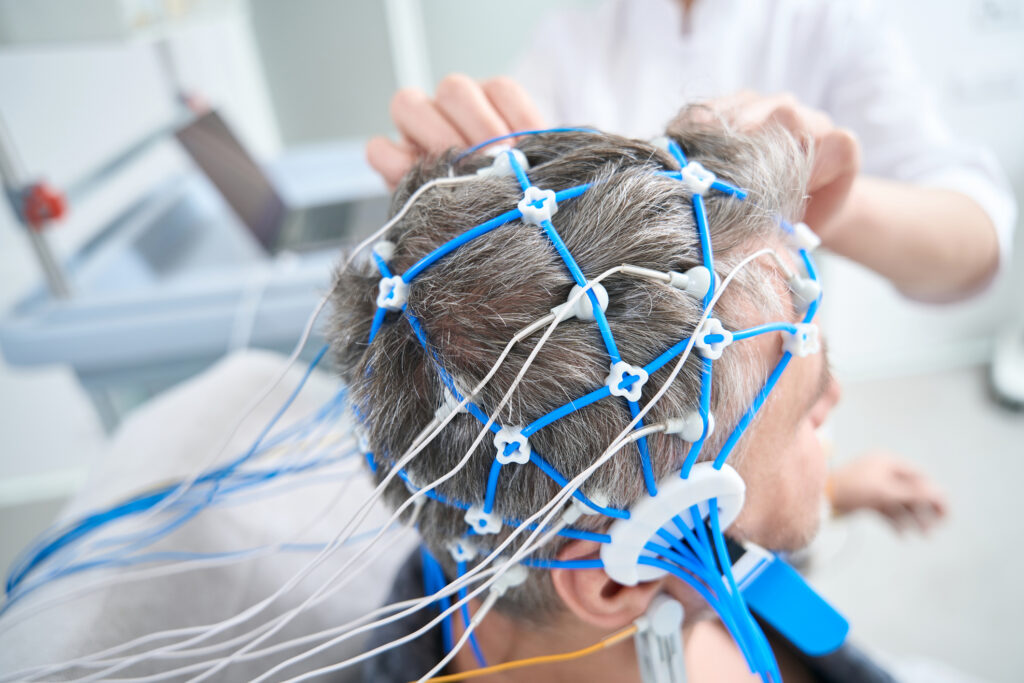
Transcranial Magnetic Stimulation (TMS) is one of the most significant advances in depression treatment in decades. It is FDA-approved for major depressive disorder, including treatment-resistant depression, and it works fundamentally differently from medication. Instead of changing brain chemistry through drugs that affect the whole body, TMS uses targeted magnetic pulses to stimulate specific areas of the brain involved in mood regulation. The result: meaningful improvement for many patients who haven’t responded to medication, with no systemic side effects.
What’s involved. TMS is delivered in brief outpatient sessions—typically 19-37 minutes each—over a course of 4-6 weeks. You sit in a chair (similar to a dental chair); a magnetic coil is positioned against the head; you’re awake throughout, and most patients read, watch something, or just rest during the session. There’s no sedation, no IV, no recovery time. You can drive yourself home and return to work or school the same day.
Who it’s especially good for. Patients who haven’t responded to multiple medications. Patients who can’t tolerate medication side effects (weight gain, sexual side effects, fatigue, GI issues). Patients who want to avoid medication entirely. Older adults already on multiple prescriptions where adding another carries interaction risks. Patients who are breastfeeding or pregnancy-planning (under appropriate guidance). Patients who simply want a treatment that doesn’t put a daily reminder of depression in their hand each morning.
Insurance coverage. TMS is covered by most major insurance plans for treatment-resistant depression. We help patients navigate the prior authorization process.
Ketamine IV therapy is another major advance in depression treatment, particularly for severe or treatment-resistant cases. Unlike traditional antidepressants, which work through serotonin and can take 4-8 weeks to show full effect, ketamine acts on the glutamate system and can produce noticeable mood improvement within hours or days of the first infusion. For patients who have been depressed for months or years, that speed can be transformative.
What’s involved. Ketamine is delivered under medical supervision in a series of carefully monitored IV sessions in our San Tan Valley clinic. Each session typically takes about an hour, including monitoring time. Most treatment courses involve six initial sessions over 2-3 weeks, followed by maintenance sessions as needed.
Who it’s especially good for. Patients with treatment-resistant depression, severe depression with significant suicidal thoughts (where the speed of response matters), depression with significant co-occurring anxiety, and patients who have not been able to wait the weeks that traditional antidepressants require.
What to know. Ketamine is not appropriate for everyone. We screen carefully for medical contraindications, substance use considerations, and other factors. We’ll have a clear conversation about whether it’s the right fit during your evaluation.
Medication is one of the most effective treatments for depression when it’s prescribed thoughtfully and monitored carefully. The most common first-line medications are selective serotonin reuptake inhibitors (SSRIs) like sertraline, escitalopram, fluoxetine, and citalopram, and serotonin-norepinephrine reuptake inhibitors (SNRIs) like venlafaxine and duloxetine. Other options include bupropion (which often has fewer sexual side effects and can be activating rather than sedating), mirtazapine (often used when sleep is a major issue), and trazodone (used adjunctively for sleep). For patients whose depression hasn’t responded fully to one medication, augmentation strategies—adding a second medication to enhance the first—often work where switching alone doesn’t.
Time to effect. Antidepressants typically take 4-8 weeks to show full effect, which is one of the most discouraging facts about traditional treatment. Many patients give up before the medication has had time to work. We monitor closely during this period and adjust as needed.
Side effects matter. Side effects are one of the most common reasons people stop antidepressants. We pay close attention to side effects and adjust accordingly—often the side effect profile is more important than the choice between medications in the same class.
Our medication management services in San Tan Valley are led by Jason Adams, PMHNP, and Colleen Fornear, PMHNP, both experienced psychiatric nurse practitioners who oversee careful monitoring of dosage, side effects, and overall effectiveness. Regular follow-ups ensure adjustments can be made promptly.

Therapy is a meaningful part of depression treatment for most patients. Cognitive Behavioral Therapy (CBT) helps patients identify and revise the thought patterns that maintain depression, and behavioral activation—structured practice of doing activities that produce mood improvement even when motivation is absent—is one of the most evidence-based approaches for major depression. For patients dealing with grief, life transitions, relationship issues, or unprocessed past experiences, longer-term therapy approaches can be valuable.
We provide therapy referrals to trusted local therapists when therapy is the right next step, and we coordinate care so that your medication, TMS or ketamine, and therapy work together rather than at cross purposes.
Postpartum depression deserves its own attention because it’s common, serious, and dramatically underdiagnosed in young-family communities like ours. Postpartum depression isn’t just feeling tired or overwhelmed—it involves persistent low mood, loss of pleasure in the baby or in other things, intrusive thoughts (often distressing), feelings of inadequacy as a parent, and sometimes thoughts of self-harm or harming the baby (which are symptoms, not predictions of behavior, and are a reason to seek care promptly).
Treatment options for postpartum depression include medications that are compatible with breastfeeding (sertraline is the most commonly studied and used), TMS (which involves no systemic medication and is compatible with breastfeeding), and therapy. The choice depends on the severity, the patient’s preferences, and the breastfeeding situation. We work carefully and respectfully with new mothers, recognizing that the bar for asking for help is especially high in the postpartum period.
In-person appointments in San Tan Valley provide a valuable opportunity for direct interaction with experienced clinicians. Whether you are coming from across SVT, Queen Creek, Florence, Apache Junction, or further out in Pinal County, these sessions allow for thorough assessments, real conversations about treatment options, and the kind of steady, present care that virtual visits can’t fully replicate.
For depression in particular, being physically present matters. Clinicians can observe subtle signs—slowed movement, flat affect, the energy in the room—that are easy to miss on video. We also pace sessions so you leave with at least a small sense of forward motion, not feeling worse than when you arrived.
Our San Tan Valley clinic is led by two experienced psychiatric nurse practitioners with training in mood, anxiety, and related disorders:
Jason Adams, PMHNP — Psychiatric Nurse Practitioner.
Colleen Fornear, PMHNP — Psychiatric Nurse Practitioner.
Our San Tan Valley team takes a patient-first, evidence-based approach: treatment plans built around your specific symptoms, life, and preferences; transparent conversations about what each option can and can’t do; and a steady pace that respects how you’re actually doing. With same-week appointments, extended hours, AHCCCS and Tricare accepted, and access to TMS and ketamine on site, we’re committed to delivering specialty depression care that’s both rigorous and genuinely accessible.
Starting depression treatment can feel daunting—especially when depression itself is making it hard to do almost anything. Your first visit is designed to be welcoming, thorough, and unhurried. Most first appointments run 60 to 90 minutes—long enough to actually hear your story without rushing through it.
We’ll talk about what’s bringing you in, how symptoms have been affecting your life, your history, any medications you’ve tried, and your goals. We’ll discuss treatment options—including TMS and ketamine if those might be a good fit—and answer your questions. You won’t be pushed into anything; we’ll come up with a plan together. Many patients tell us that just having a clear plan and someone in their corner makes a meaningful difference even before treatment starts producing its effects.
The comprehensive evaluation includes a detailed clinical interview, standardized depression assessments, screening for co-occurring conditions (anxiety, OCD, PTSD, ADHD, substance use, sleep disorders, medical conditions like thyroid disease that can cause depression-like symptoms), and—when appropriate and with your permission—input from family members or other healthcare providers. This process helps identify the full picture of what’s going on, which is the only way to build a treatment plan that actually addresses it.
We also explore your history with depression, any previous treatments, and the strategies you’ve already been using to cope. That history matters; it tells us what’s been tried, what’s helped, and what to do differently this time.
Following the evaluation, we collaborate with you to create a personalized treatment plan that fits your needs and preferences. The plan outlines recommended treatments, expected timeline, and how we’ll measure progress. Goals in depression treatment often start practical—better sleep, more energy, the ability to get through a workday or care for kids without collapsing—and expand from there into the broader work of reclaiming the life you want.
We encourage open communication and ongoing feedback so that treatment stays responsive to your evolving needs. Recovery from depression isn’t always linear; we expect that and adjust the plan accordingly.
Our clinic is located at 36457 N. Gantzel Road, Suite 102 in San Tan Valley, AZ 85140, near Gantzel and Combs in the heart of the SVT community. We serve patients from across the Southeast Valley and Pinal County, including Queen Creek, Florence, Apache Junction, Gold Canyon, Coolidge, Casa Grande, and the surrounding communities.
We treat the full range of depressive disorders, including major depressive disorder (MDD), persistent depressive disorder (chronic low mood), postpartum depression, seasonal affective patterns, depression with anxious distress, and treatment-resistant depression. We also frequently treat depression that co-occurs with anxiety, OCD, PTSD, ADHD, substance use, or chronic medical conditions.
This is one of the most common situations we see, and it’s specifically what specialty depression care is designed for. About a third of depression patients don’t respond fully to the first medication tried, but that doesn’t mean treatment can’t work. We can re-evaluate the diagnosis, try different medication strategies, consider augmentation approaches, and offer advanced options that primary care doesn’t typically provide—including FDA-approved TMS therapy and ketamine IV therapy, both of which have strong evidence for treatment-resistant depression. Many of our patients have meaningful improvement after years of feeling stuck.
Yes. Most people associate seasonal depression with northern winters, but Arizona has its own version: “summer SAD” or reverse seasonal affective patterns driven by the four-to-five-month stretch of extreme heat that forces people indoors, reduces physical activity, disrupts sleep, and isolates social life. For patients prone to depression, summer in the Southeast Valley can be the hardest season of the year. We see this pattern frequently and can plan ahead with patients before peak heat arrives.
Transcranial Magnetic Stimulation (TMS) is an FDA-approved, non-invasive treatment for depression that uses targeted magnetic pulses to stimulate areas of the brain involved in mood regulation. It’s different from medication because it doesn’t involve any drugs, has no systemic side effects (no weight gain, sexual side effects, or fatigue), and is typically delivered over 4-6 weeks of brief outpatient sessions. Patients can drive themselves home and return to normal activities the same day. TMS is particularly valuable for patients who haven’t responded to multiple medications or who want to avoid medication entirely.
Yes. San Tan Valley has a substantial young-family population, and postpartum depression is one of the most underdiagnosed conditions we treat. Postpartum depression is distinct from the “baby blues” and is a serious, treatable medical condition. We work carefully with patients who are breastfeeding to select medications that are safe in that context, and we also offer non-medication options. Treatment can begin during pregnancy or after delivery, depending on the situation.
We are in-network with most major insurance plans including Aetna, Blue Cross Blue Shield, Cigna, Optum, United Healthcare, Tricare West, AHCCCS (Arizona Medicaid), Banner Health, and many others. Please contact our San Tan Valley office at 480-956-5720 to verify your specific coverage before your first appointment.
Related Videos
Related Posts

When anxiety becomes a daily shadow instead of an occasional
Post-traumatic stress disorder (PTSD) can make daily life feel like
If you’re living with ongoing depression, you’ve likely explored many