

Mesa and the surrounding East Valley hold a wide mix of people: working families, a fast-growing aerospace, semiconductor, and manufacturing workforce, ASU students just across the river, a deep veteran community, and one of the largest concentrations of retirees and seasonal residents in the country. Depression shows up across all of them, often quietly, often hidden behind the demands of the day and the widely held expectation that you’re supposed to handle things on your own. It deserves specialty care that understands the lives our patients actually lead, discreet, evidence-based, and respectful of the range of backgrounds people bring through the door.
Our Mesa office at 2046 Riverview Auto Drive, Suite 401 sits in Riverview, where the Loop 101 and Loop 202 meet, a short drive from Downtown Mesa, Tempe, Chandler, and Gilbert and close to Riverview Park, Sloan Park, and Tempe Town Lake. For most patients across the East Valley, that means reaching us without a long cross-valley trip. We keep same-week appointments open, often within a few days for new patients.
Depression is a medical condition, not a character flaw. It involves measurable shifts in brain function, hormonal regulation, sleep architecture, and the systems that generate motivation, pleasure, and emotional response. It isn’t weakness, laziness, or a failure to think positively. Roughly one in five adults goes through a significant depressive episode at some point, and depression is one of the leading causes of disability worldwide, not because people aren’t trying hard enough, but because untreated depression genuinely disables the parts of the brain that produce energy, connection, and momentum.
The encouraging part, and it’s a big one, is that depression is highly treatable. Most people who get specialty care improve meaningfully. Those who don’t respond to the first medication often respond to the second or third, or to non-medication treatments like TMS. Even patients carrying years of treatment-resistant depression frequently find relief once the right approach comes into focus.
Depression isn’t a single condition. It’s a family of related ones, and they respond to different mixes of treatment. We cover the full range:
Major depressive disorder (MDD). Episodes of persistent low mood, loss of interest, fatigue, changes in sleep and appetite, trouble concentrating, feelings of worthlessness or guilt, and sometimes thoughts of death or suicide. Without treatment, MDD episodes typically last weeks to months and can return across a lifetime.
Persistent depressive disorder (dysthymia). A chronic, lower-grade depression present most days for at least two years (one year in adolescents). Many people with it have lived with it so long they don’t recognize it as depression; they assume this is simply who they are. It isn’t, and treatment can bring real change.
Postpartum depression. Depression that develops during pregnancy or in the first year after delivery, distinct from the short-lived “baby blues.” It affects roughly one in seven mothers, is badly underdiagnosed across nearly every community, and responds well to treatment. We work carefully with breastfeeding patients to choose compatible medications, and we also offer non-medication options.
Late-life depression. Depression in older adults, which often looks less like sadness and more like fatigue, irritability, physical complaints, memory trouble, or simply pulling back from life. It’s frequently mistaken for normal aging and left untreated. It is not a normal part of aging, and it responds to care.
Depression tied to major life transitions. Depression that develops around a retirement, a move, a loss, a career change, a caregiving role, or another identifiable turning point. Treatment can often move quickly here because the contributing factors are clear.
Seasonal patterns. Alongside classic winter patterns, the Sonoran version tends to be a summer one, where the long, brutally hot months push people indoors and produce a seasonal depression much like what northern patients feel deep in winter.
Depression with anxious distress. Depression paired with significant anxiety, racing thoughts, agitation, and restlessness. It’s very common and often responds best to combination approaches.
Treatment-resistant depression. Depression that hasn’t responded adequately to two or more medication trials. This is exactly what TMS and ketamine therapy were developed for, and many of our patients arrive after years of partial responses. Treatment-resistant doesn’t mean untreatable; it means the first-line approaches weren’t enough.
Depression with co-occurring conditions. Depression showing up alongside anxiety, OCD, PTSD, ADHD, substance use, or chronic medical conditions. Treating just one piece usually falls short, so we assess the whole picture and build an integrated plan.
Depression looks different from person to person, but the symptoms tend to gather in these areas:
Mood and emotional. Persistent sadness, hopelessness, emptiness, irritability (especially in men, teens, and parents under sustained strain), guilt, worthlessness, loss of interest or pleasure in things that used to matter, and sometimes thoughts of death or suicide. Suicidal thoughts are a serious symptom and a reason to seek care promptly, not a sign of weakness.
Physical. Fatigue and low energy, sleep changes (insomnia, early-morning waking, or sleeping too much), appetite and weight changes, slowed movement and thinking, headaches, body aches, and unexplained physical complaints. Many people see a primary care doctor first for fatigue or sleep problems before the depression is recognized. In older adults and in several cultural contexts, depression often presents mainly through physical complaints rather than expressed sadness, which can delay diagnosis.
Cognitive. Trouble concentrating, indecision, memory problems, negative or pessimistic thinking, rumination over past mistakes, and a sense that the future is closed off.
Behavioral. Withdrawing from people and activities, letting responsibilities slide, declining performance at work or school, increased alcohol or substance use, and difficulty starting or finishing tasks that used to be automatic. In high-functioning people, depression can also hide behind overwork and constant busyness as a way to avoid feeling anything.
Depression often arrives alongside other conditions. Anxiety and depression together are extremely common, each amplifying the other, and treating just one usually doesn’t hold. Depression frequently rides with OCD, PTSD, ADHD, and substance use. Chronic medical conditions, diabetes, heart disease, thyroid disorders, chronic pain, autoimmune illness, often carry a depression component that deserves its own treatment, and addressing the depression frequently improves the medical outcomes too.
At your first visit we look at the whole landscape rather than the single loudest symptom. Plans built around the actual mix of what’s happening tend to work better than plans aimed at one diagnosis in isolation.
The East Valley is one of the country’s great landing spots for retirees and winter residents, and late-life depression is one of the most overlooked conditions we treat. It rarely announces itself as sadness. More often it looks like withdrawal, fatigue, irritability, aches, poor sleep, or a quiet loss of interest that everyone around the person, sometimes including their own doctor, chalks up to getting older. That framing is a trap. Depression is not a normal part of aging, and it responds to treatment at any age. A few of the patterns we see most:
Retirement and loss of role. Work provides structure, identity, and daily purpose, and its sudden absence can hit harder than people expect. The open calendar that sounded like relief can turn into a void, and for some that void deepens into clinical depression.
Distance from family. Many people move to Arizona for the climate and end up hundreds or thousands of miles from adult children and grandchildren. That distance, and the missed everyday moments it creates, is a real and steady driver of low mood.
Grief and widowhood. Losing a spouse or a circle of longtime friends reshapes daily life completely. Ordinary grief is not depression, but grief can tip into depression, and knowing the difference is part of what we do.
The seasonal rhythm. For year-round residents, the summer departure of winter neighbors can thin out a social world right as the heat forces everyone indoors. For seasonal residents, the back-and-forth between two homes and two communities carries its own kind of dislocation.
Depression and medical illness together. In older adults, depression and chronic medical conditions feed each other, and depression can quietly worsen recovery, energy, and adherence. Treating it often improves the medical picture too. For patients already taking several prescriptions, TMS is a particularly good option because it adds no drug-interaction risk.
Arizona has one of the largest veteran and military-retiree populations in the country, and a great many settle in the East Valley. Depression in this community often gets folded into a conversation about PTSD, but it deserves its own treatment. The move back to civilian life, the loss of mission and unit, service-connected injury and chronic pain, and the isolation that can follow all contribute. We treat depression directly, we’re in-network with Tricare, and we coordinate with the Phoenix VA Health Care System when patients also use VA benefits.
The East Valley is home to substantial Hispanic and Native American communities, along with a range of immigrant and refugee families, and depression in these communities is frequently missed, not because the underlying condition differs, but because of how it gets framed and who has access to specialty care.
In many communities, depression is understood as weakness, a lack of faith, a family failing, or something best kept private and handled at home rather than treated. We don’t dismiss those framings, and we don’t lecture. We do want to be clear about one thing: depression is a medical condition, treatment works, and seeking care is not a failure of strength or of family. Patients often tell us afterward that they wish they’d come in years sooner. When we can, we make therapy referrals in languages other than English, and we work to keep care responsive to the cultural contexts our patients bring with them. If language preference is part of what’s been getting in the way, tell us when you schedule.
Concerns about privacy are legitimate and common, and they can carry extra weight for patients with employer-sponsored benefits, security-clearance considerations, or specialized roles. Mental health treatment records are protected by HIPAA, and your employer cannot access them without your written authorization. We work to keep care discreet: extended hours that don’t require explaining absences, appointment times that fit before-work or after-work routines, and clear conversations about what is and isn’t shared with anyone. Treatment for depression also generally does not affect immigration status, though specific situations vary, and we recommend patients with that concern consult an immigration attorney about their particular case.
Beyond the retiree, veteran, and community contexts above, a few patterns show up again and again in our Mesa patients. Naming them isn’t about reducing anyone to their stressors; it’s about recognizing that some of what people carry is shaped by the realities of life here:
Burnout depression. The East Valley’s aerospace, semiconductor, and manufacturing employers, along with its high-pressure corporate and tech roles, run on demanding performance cycles, frequent reorganizations, and long hours. Burnout depression is different from ordinary stress; it doesn’t lift with a weekend off, and the line into clinical depression often gets crossed without the person noticing.
Postpartum depression in a diverse new-mother population. Postpartum depression is real, common, and culturally complicated. In many of the East Valley’s Hispanic, Native American, and other communities, it’s sometimes framed as something to push through with family support or tradition. It isn’t a failure to push through; it’s a treatable medical condition. Breastfeeding-compatible medications exist, and TMS offers a non-medication route for mothers who prefer to avoid systemic medication.
Caregiver depression. Adult children caring for aging parents and spouses caring for a partner with a serious illness carry a sustained load that quietly erodes sleep, connection, and mood. Caregiver depression is common and often goes unaddressed because the person’s attention is entirely on someone else.
Healthcare worker depression. Nurses, techs, and physicians across Banner Desert, Banner Baywood, Mountain Vista Medical Center, Cardon Children’s, and the wider East Valley systems carry heavy burnout-related loads. It often goes untreated because of the same “I’m the one who takes care of everyone else” framing that keeps clinicians from seeking their own care.
Commute and isolation depression. The Loop 101, Loop 202, and US 60 move heavy traffic, and long daily commutes eat into the sleep, exercise, and social connection that protect against depression. In a region where many people already live far from extended family, that added isolation matters.
Living in the desert creates conditions that feed depression in ways patients in milder climates don’t run into. A few patterns worth naming:
Summer confinement and seasonal depression. The Valley’s summers are long, extreme, and increasingly record-setting. Months of avoiding the outdoors, less incidental sunlight in the parts of the day people are actually out, and fewer casual social encounters can produce a real seasonal depression. For people prone to it, roughly June through September can be a hard stretch.
Isolation in the off-season. As winter residents leave and the heat keeps everyone inside, year-round residents can find their social world contracting at exactly the wrong time. That thinning of everyday contact is its own quiet risk factor.
Recovery in the good months. From roughly October through April, the Valley offers some of the best conditions anywhere for outdoor behavioral activation, one of the most evidence-based tools in depression recovery. Riverview Park, the Rio Salado corridor, Usery Mountain, and the trails around the Superstitions all support the kind of movement and connection that treatment builds on.
Our clinic offers a full range of depression treatments, from first-line care to advanced options for treatment-resistant depression. Most patients reach specialty care after a primary care provider started them on an SSRI that didn’t do enough. Our value is in what comes next: a careful re-evaluation, a broader set of medication options, and access to TMS and ketamine, treatments primary care usually doesn’t offer but that have strong evidence for depression that hasn’t responded to standard care.
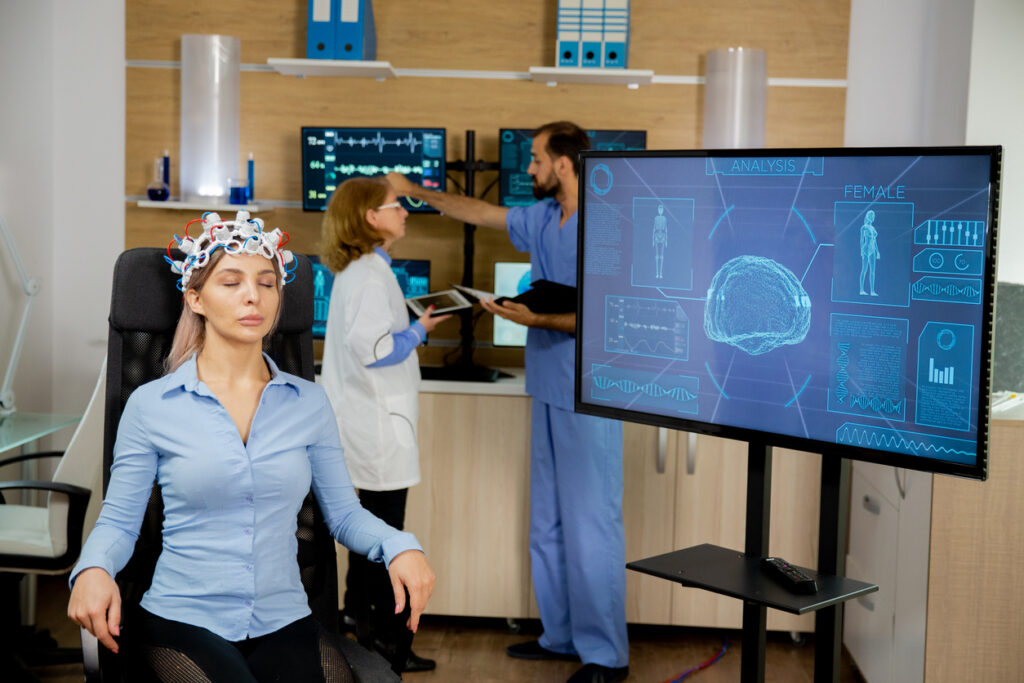
Transcranial Magnetic Stimulation (TMS) is one of the most important advances in depression treatment in decades. It’s FDA-approved for major depressive disorder, including treatment-resistant depression, and it works in a fundamentally different way than medication. Rather than changing brain chemistry through drugs that act on the whole body, TMS uses targeted magnetic pulses to stimulate specific mood-regulating areas of the brain. The result is meaningful improvement for many people who haven’t responded to medication, with no systemic side effects.
What’s involved. TMS is delivered in brief outpatient sessions, typically 19 to 37 minutes each, across 4 to 6 weeks. You sit in a chair, a magnetic coil rests against your head, you’re awake the whole time, and most patients read, watch something, or just rest. There’s no sedation, no IV, no recovery time. You drive yourself home and get back to your day right after.
Who it suits especially well. People who haven’t responded to several medications. People who can’t tolerate medication side effects such as weight gain, sexual side effects, fatigue, or GI issues. People who want to avoid medication entirely. Older adults already on multiple prescriptions, where another drug carries interaction risk. Patients who are breastfeeding or planning a pregnancy, under appropriate guidance. And anyone who wants a treatment that doesn’t appear on a prescription record.
Insurance coverage. TMS is covered by most major plans for treatment-resistant depression, and we help patients work through the prior-authorization process.
Ketamine IV therapy is another major advance, particularly for severe or treatment-resistant depression. Unlike traditional antidepressants, which work through serotonin and can take four to eight weeks to reach full effect, ketamine acts on the glutamate system and can bring noticeable mood improvement within hours or days of the first infusion. For someone who has been depressed for months or years, that speed can be a turning point.
What’s involved. Ketamine is delivered under medical supervision across a series of carefully monitored IV sessions in our Mesa clinic. Each session usually runs about an hour, including monitoring. A typical course involves six initial sessions over two to three weeks, followed by maintenance sessions as needed.
Who it suits especially well. Patients with treatment-resistant depression, severe depression with significant suicidal thoughts (where a fast response matters), depression with heavy co-occurring anxiety, and anyone who hasn’t been able to wait out the weeks that traditional antidepressants require.
What to know. Ketamine isn’t right for everyone. We screen carefully for medical contraindications, substance-use considerations, and other factors, and we’ll have a clear conversation about whether it fits during your evaluation.
Medication is one of the most effective depression treatments when it’s prescribed thoughtfully and monitored closely. The common first-line choices are SSRIs such as sertraline, escitalopram, fluoxetine, and citalopram, and SNRIs such as venlafaxine and duloxetine. Other options include bupropion (often fewer sexual side effects, and activating rather than sedating), mirtazapine (frequently used when sleep is a major problem), and trazodone (used adjunctively for sleep). When depression hasn’t responded fully to one medication, augmentation, adding a second medication to boost the first, often works where switching alone doesn’t.
Time to effect. Antidepressants usually take four to eight weeks to reach full effect, which is one of the most discouraging facts about traditional treatment, and a big reason people give up before a medication has had time to work. We monitor closely through that window and adjust as needed.
Side effects matter. Side effects are among the most common reasons people stop antidepressants. We pay close attention to them and adjust accordingly; often the side-effect profile matters more than the choice between two medications in the same class.
Medication management at our Mesa clinic is handled by our board-certified psychiatric providers, who keep close watch on dosage, side effects, and overall effectiveness. The aim is the right medication at the right dose with the fewest side effects, which usually takes some fine-tuning, and regular follow-ups let us adjust quickly.

Therapy is a meaningful part of depression treatment for most people. Cognitive Behavioral Therapy (CBT) helps you spot and rework the thought patterns that keep depression going, and behavioral activation, the structured practice of doing mood-lifting activities even when motivation is absent, is one of the most evidence-based approaches for major depression. For patients working through grief, a life transition, a loss, relationship strain, or unprocessed past experiences, longer-term therapy can be valuable.
We refer to trusted local therapists when therapy is the right next step, and we coordinate care so your medication, your TMS or ketamine, and your therapy all pull in the same direction. For patients who prefer therapy in a language other than English, we make those referrals when we can.
Postpartum depression deserves its own attention because it’s common, serious, and badly underdiagnosed almost everywhere. It isn’t simply being tired or overwhelmed; it involves persistent low mood, loss of pleasure in the baby or in anything else, intrusive and often distressing thoughts, feelings of inadequacy as a parent, and sometimes thoughts of self-harm or of harming the baby (which are symptoms, not predictions, and a reason to seek care promptly).
Treatment options include medications compatible with breastfeeding (sertraline is the most studied and widely used), TMS (no systemic medication, and compatible with breastfeeding), and therapy. The right choice depends on severity, the mother’s preferences, and the breastfeeding situation. We work carefully and respectfully with new mothers, including patients from the East Valley’s diverse communities, aware that the bar for asking for help is especially high in the postpartum period and that cultural context shapes how depression is understood and talked about.
In-person appointments in Mesa give you direct time with experienced clinicians. Whether you’re coming from Tempe, Chandler, Gilbert, Queen Creek, or Apache Junction, these sessions make room for thorough assessment, real conversation about your options, and the kind of steady, present care that video visits can’t fully match.
With depression in particular, being in the room matters. Clinicians can pick up the subtle signs, slowed movement, flat affect, the energy in the room, that are easy to miss on a screen. We also pace sessions so you leave with at least a small sense of forward motion, not feeling worse than when you walked in.
Our Mesa clinic is staffed by board-certified psychiatric providers with training across mood, anxiety, and related conditions:
Dr. Bryan DeFelice treats the full range of depressive disorders, with an emphasis on accurate diagnosis and a plan that gets adjusted over time based on how you’re actually doing.
Dr. Neil Wilkey works with patients whose depression travels alongside anxiety, PTSD, or other concerns, taking a whole-person view that weighs both the neurology and the life around it.
Both providers share a patient-first, evidence-based approach: plans built around your specific symptoms, life, and preferences; honest conversation about what each option can and can’t do; and a steady pace that respects how you’re actually doing. With same-week appointments, extended hours, Tricare accepted, TMS and ketamine available on site, and discretion that respects real life, we’re set on delivering specialty depression care that fits the way our patients actually live.
Starting depression treatment can feel like a lot, especially when depression itself makes almost anything feel like a lot. Your first visit is built to be welcoming, thorough, and unhurried. Most run 60 to 90 minutes, long enough to actually hear your story instead of rushing it.
We’ll talk about what brought you in, how the symptoms have been shaping your life, your history, any medications you’ve tried, and your goals. We’ll walk through the options, including TMS and ketamine if they might be a fit, and answer your questions. Nobody gets pushed into anything; we build the plan together. And if you have privacy, career, or family concerns, this is a good moment to raise the questions you’ve been carrying.
The comprehensive evaluation includes a detailed clinical interview, standardized depression assessments, screening for co-occurring conditions (anxiety, OCD, PTSD, ADHD, substance use, sleep disorders, and medical conditions like thyroid disease that can mimic depression), and, when it’s helpful and you’re comfortable with it, input from family or other providers. This is how we build the full picture, which is the only way to design a plan that actually addresses it.
We also dig into your history with depression, any past treatments, and the strategies you’ve already been leaning on. That history matters. It tells us what’s been tried, what helped, and what to do differently this time.
After the evaluation, we work with you to build a personalized treatment plan that fits your needs and preferences. It lays out the recommended treatments, the expected timeline, and how we’ll track progress. Goals in depression treatment often start concrete, better sleep, more energy, getting through a workday or caring for kids without collapsing, and expand from there into the larger work of reclaiming the life you want.
We keep communication open and invite ongoing feedback so treatment stays responsive as things shift. Recovery from depression isn’t always a straight line; we expect that and adjust as we go.
Our clinic is at 2046 Riverview Auto Drive, Suite 401, Mesa, AZ 85201, in the Riverview district where the Loop 101 meets the Loop 202. That puts us within easy reach of Downtown Mesa, Tempe, Chandler, and Gilbert, and a straightforward drive for patients in Scottsdale, Queen Creek, Apache Junction, and the Mesa neighborhoods of Dobson Ranch, Red Mountain, Las Sendas, and Eastmark.
We treat the full range of depressive disorders, including major depressive disorder (MDD), persistent depressive disorder (chronic low mood), postpartum depression, late-life depression in older adults, seasonal patterns, depression with anxious distress, depression tied to major life transitions, and treatment-resistant depression. We also frequently treat depression that runs alongside anxiety, OCD, PTSD, ADHD, substance use, or chronic medical conditions.
Yes, and it’s a large part of what we do. The East Valley draws many retirees and seasonal residents, and late-life depression is one of the most under-recognized conditions we see, often written off as normal aging when it’s actually treatable. We treat depression connected to retirement and loss of role, grief and widowhood, distance from adult children and grandchildren, isolation, and the interplay between depression and chronic medical conditions. For older adults already managing several prescriptions, TMS can be an especially good fit because it adds no drug-interaction risk.
This is one of the most common situations we see, and it’s exactly what specialty depression care is built for. About a third of patients don’t respond fully to the first medication tried, but that doesn’t mean treatment can’t work. We can re-examine the diagnosis, try different medication strategies, consider augmentation approaches, and offer advanced options that primary care usually doesn’t provide, including FDA-approved TMS therapy and ketamine IV therapy, both with strong evidence for treatment-resistant depression. Many patients find real improvement after years of feeling stuck.
Mental health treatment records are protected by HIPAA, and your employer can’t access them without your written authorization. We work to keep care discreet, with extended hours that don’t require explaining absences to your team. Treatment for depression also generally does not affect immigration status, though specific situations vary, and patients with that concern are encouraged to consult an immigration attorney about their particular case.
Transcranial Magnetic Stimulation (TMS) is an FDA-approved, non-invasive treatment for depression that uses targeted magnetic pulses to stimulate the areas of the brain involved in mood regulation. It differs from medication because it involves no drugs, produces no systemic side effects (no weight gain, sexual side effects, or fatigue), and is usually delivered over 4 to 6 weeks of brief outpatient sessions. Patients drive themselves home and return to normal activities the same day. TMS is especially valuable for people who haven’t responded to several medications or who want to avoid medication entirely.
We’re in-network with most major insurance plans, including Aetna, Blue Cross Blue Shield, Cigna, Optum, United Healthcare, Tricare, and many others. Contact our Mesa office at 844-310-1649 to confirm exactly what your plan covers before your first appointment.
Extremely educated about Ketamine therapy. My depression symptoms improved, despite the exorbitant cost.
C.F.
Google
Extremely educated about Ketamine therapy. My depression symptoms improved, despite the exorbitant cost.
R.H.
Google
Dr. Clay has given me my life, family, and friends back to me. When I first started seeing Dr. Clay, I was so depressed and anxious that I didn’t go out of the house. Dr. Clay’s medical assistant on my first appointment told me that he would never give up on me and he never has. Flash forward to now, and I’m seeing my friends, family, going out to run errands on my own, and even going to see my beloved sister in Colorado March 1st with our daughter. I am SO thankful for Dr. Clay and his team at Serenity Mental Health. They are a huge blessing and I feel so lucky to have found them!
k.
Google
My psychiatrist is named Dr. Colvin and he is an excellent person to count on for aid with mental health. He has prescribed medicine for me that has worked wonders in my life, and he continues to meet my concerns by providing more medication when needed. Alongside him, the staff is extremely flexible with their availability, and whenever I’ve needed to change a date on the calendar for appointments, they have been swift and generous to meet those needs as well. I’d recommend Serenity to anyone that is struggling to battle the demons in their head; they have changed my life and I know they will do the same for you as well.
K.D.
Google
Tolulope’s experience with TMS therapy has been excellent. She is patient and really kind, even if the initial consultation took some time to schedule.
M.V.
Google
Related Videos
Related Posts

Depression rarely behaves like a simple problem with a simple
If you’re living with ongoing depression, you’ve likely explored many

If you’re experiencing suicidal thoughts or in crisis: Contact the