

Local Richardson access: TMS therapy in Richardson requires a series of short, repeated visits, so location matters. Our clinic near CityLine, US-75, the Telecom Corridor, and the President George Bush Turnpike helps patients from Richardson, Plano, Garland, Murphy, Sachse, UT Dallas, and North Dallas keep treatment consistent without adding unnecessary travel strain.
If you or a loved one is struggling with mental health challenges, finding effective and compassionate treatment options can feel overwhelming. At our psychiatric clinic in Richardson, Transcranial Magnetic Stimulation (TMS) therapy offers a non-invasive path for eligible patients who have not found enough relief through traditional treatments.
Understanding what TMS therapy entails, how often appointments occur, and why local access matters can make the next step feel more manageable. Our Richardson team builds treatment recommendations around your diagnosis, medication history, goals, safety factors, and daily routines across the North Dallas area.
Transcranial Magnetic Stimulation, commonly known as TMS therapy, is a non-invasive treatment that uses targeted magnetic pulses to stimulate specific areas of the brain involved in mood regulation and emotional control. It is often discussed for patients with major depressive disorder or treatment-resistant depression, especially when medication has not helped enough or has caused side effects that are difficult to tolerate.
Unlike surgery or implanted devices, TMS does not require incisions, anesthesia, or recovery time. Patients remain awake during treatment, and most can return to normal daily activities afterward. A session typically involves sitting comfortably while a device is positioned near the scalp to deliver magnetic pulses to the targeted treatment area.
Because TMS is usually scheduled several times per week over multiple weeks, having a local TMS provider can make the full treatment course easier to complete. Our Richardson clinic is convenient for patients near US-75, the President George Bush Turnpike, CityLine, UT Dallas, the Telecom Corridor, Plano, Garland, Murphy, Sachse, North Dallas, and nearby DFW communities.
TMS is not right for every patient, which is why evaluation comes first. Your provider will review your diagnosis, prior medications, treatment response, medical history, safety factors, and goals before recommending a plan.
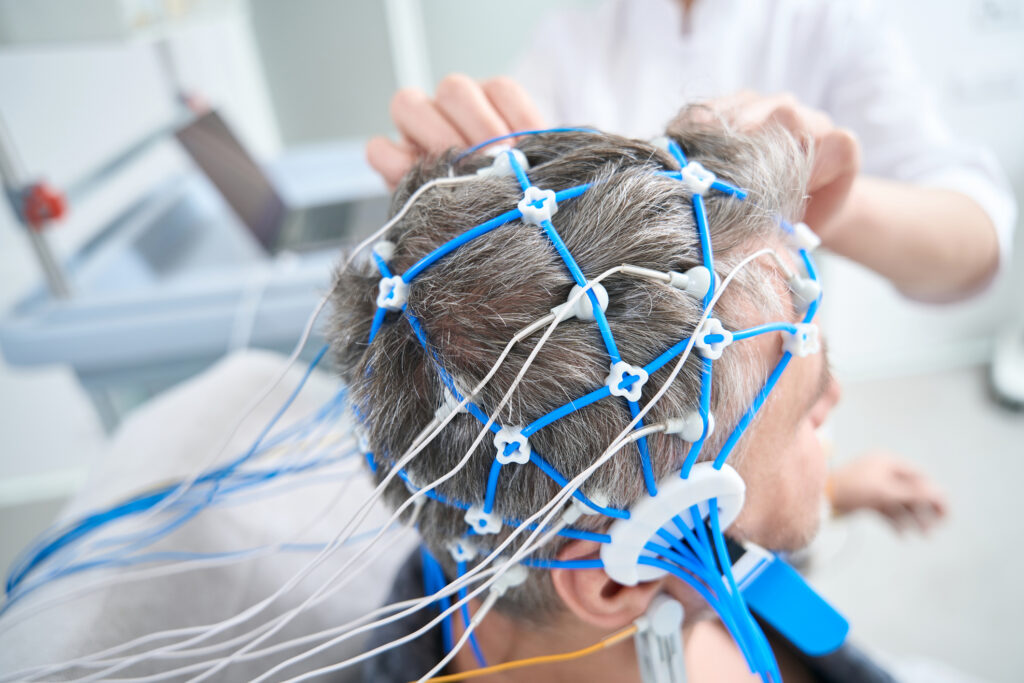
TMS therapy involves placing an electromagnetic coil against the scalp near the forehead. This coil generates brief magnetic pulses that pass painlessly through the skull and into the brain, stimulating nerve cells in the prefrontal cortex, a region associated with mood regulation, motivation, and cognitive function.
The stimulation helps modulate brain activity and may support healthier communication in circuits linked to depression and related symptoms. Because TMS targets specific brain areas, it offers a focused approach that differs from systemic treatments like medications.
The science behind TMS is connected to neuroplasticity, the brain’s ability to reorganize and form new neural connections. Repeated sessions are designed to encourage the brain to strengthen pathways that support mood stability, energy, and emotional regulation over time.
The U.S. Food and Drug Administration has cleared or approved TMS devices for specific mental health uses, most notably major depressive disorder, including treatment-resistant depression. This means TMS is recognized as a treatment option for patients who have not responded adequately to standard antidepressant treatment or who need a non-medication approach because of side effects, medical considerations, or personal preference.
TMS has also received clearance for obsessive-compulsive disorder (OCD) using appropriate protocols and devices. For OCD patients, TMS may be considered when intrusive thoughts and compulsive behaviors remain disruptive despite medication, therapy, or other structured support.
Other conditions, including anxiety disorders and post-traumatic stress disorder (PTSD), are areas of ongoing research and clinical discussion. Some patients with anxiety or trauma symptoms may be evaluated for TMS when those symptoms overlap with depression, OCD, or treatment-resistant mood concerns.
At our Richardson clinic, FDA-cleared TMS therapy is approached as one part of a personalized mental health plan for patients from Richardson, Plano, North Dallas, Garland, Murphy, and the surrounding US-75 and President George Bush Turnpike corridor.
At Serenity Psychiatric Clinic in Richardson, TMS therapy may be considered for a range of mental health conditions when symptoms have not improved enough with traditional care. Your provider will explain where TMS has strong clinical support, where it may be considered as part of a broader plan, and where another option may be more appropriate.
Treatment-resistant depression – support for persistent low mood, loss of interest, fatigue, and hopelessness when antidepressants or therapy have not provided enough relief.
Major depressive disorder – non-invasive care that may help patients in Richardson and North Dallas address depressive symptoms without anesthesia or downtime.
Obsessive-compulsive disorder (OCD) – a potential option for intrusive thoughts and compulsive behaviors when standard treatments have not gone far enough.
Anxiety symptoms – evaluation when anxiety overlaps with treatment-resistant mood symptoms, chronic worry, or emotional dysregulation.
PTSD and trauma-related symptoms – clinical review when trauma symptoms occur alongside depression, OCD, or persistent mood disruption.
Understanding the TMS treatment process can help ease uncertainty before care begins. At our Richardson mental health center, providers prioritize patient comfort, education, and clear expectations from the initial consultation through the final session.
Initial consultation: Your provider reviews your symptoms, diagnosis, treatment history, medication response, medical factors, and goals.
Candidate review: Eligibility is assessed carefully, including seizure history, metal implants near the head, and other safety considerations.
Brain mapping: If TMS is appropriate, treatment planning helps identify the precise target area and stimulation settings.
Repeated sessions: TMS is usually scheduled several times per week, which makes access near CityLine, US-75, and nearby communities important.
Progress monitoring: Your care team tracks symptom changes, tolerability, and next steps throughout the treatment course.
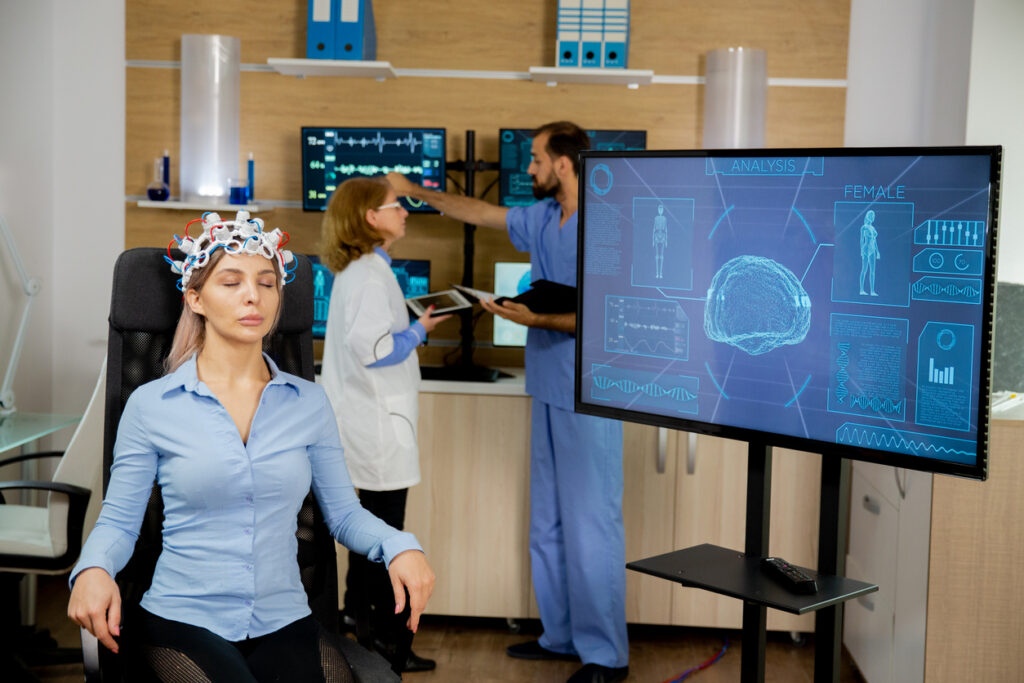
Once you are cleared for treatment, a brain mapping session may be used to identify the precise areas of the brain to target. This personalized approach helps focus stimulation where it is most clinically appropriate for your symptoms and treatment plan.
Your plan typically outlines the number of sessions, frequency, stimulation settings, and how progress will be monitored. Richardson patients often appreciate having a local clinic near major routes because TMS works best when the full course can be completed consistently.
During each TMS session, you will be comfortably seated while the electromagnetic coil is positioned on your scalp. The device delivers magnetic pulses in a series of brief bursts, which may feel like tapping or mild scalp discomfort.
Sessions often last between 20 and 40 minutes, depending on the protocol. Because TMS does not involve sedation, most patients can drive themselves, return to work or school, and continue normal daily activities afterward.
For patients coming from Richardson, Plano, Garland, Murphy, Sachse, UT Dallas, or the Telecom Corridor, that low-disruption schedule can make treatment more practical than options that require recovery time.
Our psychiatric clinic in Richardson, TX offers access to TMS protocols designed to meet different clinical needs. Your provider will explain which option fits your diagnosis, symptom history, and safety profile.
Standard TMS (rTMS): Repetitive transcranial magnetic stimulation delivers repeated magnetic pulses to targeted brain regions and is commonly used for treatment-resistant depression.
Deep TMS (dTMS): Deep TMS uses specialized coils that can reach broader or deeper brain networks and may be considered for depression or OCD when clinically appropriate.
Theta Burst Stimulation (TBS): TBS delivers rapid bursts of stimulation in shorter sessions for some patients, creating a more efficient visit schedule while still requiring careful evaluation and monitoring.
Choosing the right treatment for depression can feel overwhelming, especially if you have already tried medication, therapy, lifestyle changes, or primary care support without getting enough relief. TMS therapy treatment in Richardson, TX gives patients another option when depression remains persistent or returns repeatedly.
TMS vs. antidepressant medication: Medication can be important and effective, but some patients experience limited improvement, delayed response, or side effects such as fatigue, sleep disruption, emotional blunting, gastrointestinal symptoms, or weight changes. TMS offers a non-medication approach that targets brain activity more directly and does not circulate through the whole body.
TMS vs. therapy and counseling: Therapy helps patients work through thought patterns, stress, relationships, grief, and coping skills. TMS works differently by targeting mood-related brain circuits. For many patients, these approaches complement one another rather than compete.
TMS vs. ECT: TMS does not require anesthesia, does not intentionally trigger a seizure, and does not involve the same recovery period as electroconvulsive therapy. Your provider can explain when each option may or may not be appropriate.
TMS may be appropriate for adults with depression, OCD, or overlapping anxiety or trauma symptoms who have not fully responded to standard treatments, who want to avoid additional medication side effects, or who need a non-invasive option that fits around daily responsibilities.
A good candidate still needs a careful evaluation. Your Richardson provider will review prior medication trials, therapy history, symptom severity, sleep, substance use, medical history, seizure risk, and any implanted devices or metal near the head.
If TMS is not the right fit, the same evaluation can still help clarify next steps, including medication management, ketamine infusion therapy, psychotherapy referrals, or another personalized care plan.

TMS therapy is generally considered safe and well tolerated when administered by trained professionals. It is non-invasive and does not involve systemic medication, which helps reduce the risk of medication interactions or whole-body side effects.
Some patients experience mild scalp discomfort, headache, tingling, or temporary fatigue during or after sessions. These effects are usually short-lived and can often be managed by adjusting positioning, intensity, or comfort measures.
Serious side effects are rare, but seizure risk is one reason screening matters. TMS is not recommended for some patients with certain implanted metallic devices in or near the head, a history of seizures, or specific neurological concerns. Your Richardson care team will review these details before treatment begins.
Many major insurance plans cover TMS for treatment-resistant depression when clinical criteria are met. Coverage requirements can vary by plan, and some insurers ask for documentation of diagnosis, medication history, therapy history, symptom severity, and prior treatment response.
Our team can help Richardson patients understand the verification process before treatment begins. If you are commuting from Plano, Garland, Murphy, Sachse, North Dallas, or another DFW community, we can also review practical scheduling considerations so the treatment course fits your week as realistically as possible.
Richardson offers practical access for patients seeking advanced mental health care without traveling across the metroplex for every session. Our clinic is near CityLine, US-75, the Telecom Corridor, UT Dallas, and the President George Bush Turnpike, making repeated TMS appointments more manageable for patients across North Dallas and Collin County.
Local treatment access: Short, repeated visits are easier to complete when the clinic is close to the routes you already use.
Integrated psychiatric care: TMS can be coordinated with medication management, therapy support, and other treatment options when appropriate.
Personalized planning: Your care team adjusts recommendations based on diagnosis, treatment history, safety factors, and treatment goals.
Education at each step: Patients receive clear guidance on what TMS feels like, how long treatment takes, and what progress may look like.
TMS is often most effective when delivered as part of comprehensive psychiatric care rather than as a standalone procedure. Our Richardson approach integrates TMS with thoughtful evaluation, medication review, therapy coordination when needed, lifestyle considerations, sleep support, and follow-up planning.
Patients navigating depression, OCD symptoms, anxiety, PTSD, or overlapping concerns may need more than one type of support. The goal is to match the level of care to your real symptoms, not force every patient into the same treatment path.
The mental health professionals offering TMS in Richardson are trained to evaluate candidacy, administer treatment safely, and monitor response throughout the course of care. They take time to educate patients, answer questions, and explain how TMS fits into the larger treatment plan.
Choosing the right TMS provider is a practical and clinical decision. Look for a clinic that offers comprehensive evaluations, clear communication, careful safety screening, personalized treatment planning, and support for insurance verification and scheduling.
For patients around Richardson, CityLine, UT Dallas, Plano, Garland, Murphy, Sachse, and North Dallas, local access can also make it easier to stay consistent through the full course of treatment.
Before your consultation, gather relevant medical records, a list of current medications, prior treatment history, and notes about symptoms you want to discuss. It can also help to write down questions about session frequency, side effects, insurance coverage, and expected timelines.
During your evaluation, your provider will review whether TMS is appropriate and explain the next steps in plain language. If treatment is recommended, you will learn how appointments are scheduled, what the first mapping session involves, and how progress will be tracked.
Taking the first step toward TMS therapy can feel daunting, but our Richardson team is here to make the process understandable, respectful, and centered on your goals.
TMS is an in-person treatment, so convenient access matters. Our Richardson clinic supports patients near CityLine, US-75, the Telecom Corridor, UT Dallas, Plano, Garland, Murphy, Sachse, and North Dallas.
TMS therapy uses magnetic pulses to stimulate specific brain regions involved in mood regulation. It is non-invasive, does not require anesthesia, and is often considered when depression has not improved enough with medication.
Yes. Serenity offers TMS therapy in Richardson for eligible patients. The clinic is near CityLine, US-75, UT Dallas, the Telecom Corridor, and the President George Bush Turnpike, which can make repeated treatment visits easier to schedule.
Treatment schedules vary, but TMS commonly involves a series of sessions over several weeks. Your provider will explain the recommended schedule after evaluating your symptoms, diagnosis, safety factors, and treatment history.
Most patients can return to normal activities after a TMS session. Because it does not involve sedation, many people are able to fit visits around work, school, caregiving, or commuting in the Richardson and North Dallas area.
TMS may be appropriate for adults with depression, OCD, or overlapping symptoms who have not fully responded to standard care or who have had difficulty tolerating medication side effects. A clinical evaluation is required to confirm whether TMS is safe and appropriate.
TMS is best known for treatment-resistant depression, and it may also be considered in certain cases involving OCD or other symptoms depending on clinical criteria. Our Richardson team can explain whether TMS fits your situation.
Bring your medication list, prior treatment history, insurance information, and any questions about session frequency, safety, side effects, and expected timelines. This helps your Richardson provider make a more personalized recommendation.
Related Videos
Related Posts

When anxiety becomes a daily shadow instead of an occasional
Post-traumatic stress disorder (PTSD) can make daily life feel like
If you’re living with ongoing depression, you’ve likely explored many