

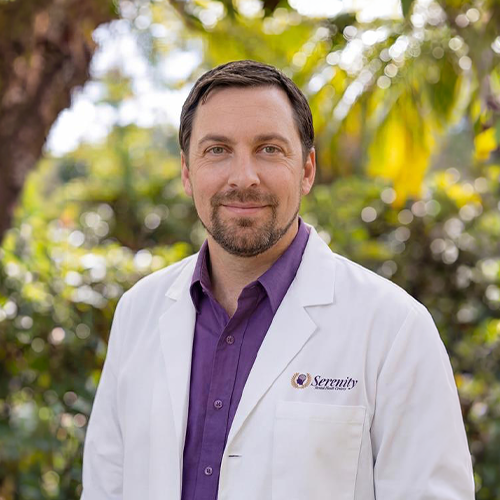
Psychiatrist
Dr. Anthony Petersen grew up in central eastern Utah, part of a family with five generations of roots in Emery County. He enjoys the wide range of outdoor experiences Utah has to offer.
Education and Background
Dr. Petersen completed his undergraduate degree in English Literature at Southern Utah University in Cedar City. After college, he worked as a technical writer in Austin, Texas before returning to Utah to pursue medicine.
He volunteered in emergency departments and worked in a research lab, and that broad interest in science eventually became a focused path toward medicine. He earned his medical degree and completed his psychiatry residency at the University of Utah, bringing the same intellectual curiosity to patient care that first drew him to the field.
Care Philosophy
Dr. Petersen discovered his calling to psychiatry during his third year of medical school. Rotating through different specialties, he found that mental health was where he felt the deepest sense of connection with the real difference he could see himself making in patients’ lives.
He keeps treatment plans tailored and specific, using the lowest-risk options whenever possible and ensuring that medications and doses are no higher than necessary to achieve real benefit. His goal is to help solve the problem you are experiencing. He works hard to understand your perspective and develop a plan that addresses your needs and meets your specific goals.
Personal Interests
Outside the office, Dr. Petersen takes full advantage of Utah's outdoor experiences. He enjoys skiing in the mountains, camping in the red rock desert, and spending time with Bacchus, his Bernese Mountain Dog.
What To Expect
In your first appointment, Dr. Petersen will listen first, ask clarifying questions second, and then reflect back what he’s heard to make sure he understands your goals and priorities before anything else happens. He shares information about treatment options and their relative risks and benefits, so you can make informed decisions that match your own values. You’ll leave with a plan you helped shape.
He brings an unusual combination of skills to that conversation: the close reading and careful interpretation he developed as a literature student, and the evidence-based problem-solving he honed in medical training. Together, they make him a clinician who listens differently and thinks about what he hears just as carefully.