

Orlando is a community shaped by many forces at once—a 24-hour tourism and hospitality workforce, three major hospital systems, fast population growth, internationally diverse neighborhoods, and a region that lives every June through November with one eye on the tropics. Anxiety shows up across all of these populations, and it deserves specialty care that’s familiar with them.
Our location at 9400 Southpark Center Loop, Suite 450 sits in the Southpark Center area off Sand Lake Road, just south of Universal and convenient to I-4 and SR-528 (the Beachline). Patients coming from Dr. Phillips, Bay Hill, MetroWest, Lake Nona, Winter Garden, Winter Park, Oviedo, Kissimmee, and Altamonte Springs can typically reach us without crossing the city. We’re open Monday through Friday from 6:00 AM to 9:00 PM and Saturday from 7:00 AM to 7:00 PM, with same-day appointments available, because Central Florida shifts don’t fit a standard 9-to-5 clinic.
Anxiety is the body’s natural alarm system—useful for getting out of the way of a moving car or focusing on a deadline. But when that alarm starts firing without a real threat, or won’t turn off after the threat has passed, anxiety stops being a normal response and starts being a clinical condition. Anxiety disorders affect the brain’s threat-detection systems, the hormonal stress response, and the way the body and mind process uncertainty. They’re not character flaws and they’re not the result of not trying hard enough. They are treatable medical conditions, and most people who get specialty care see meaningful improvement.
There’s an important distinction between everyday anxiety—the kind everyone experiences before a presentation or a difficult conversation—and an anxiety disorder. Everyone gets nervous; that’s not what we treat. We treat anxiety that’s persistent, that’s out of proportion to the actual situation, that interferes with sleep, work, relationships, or quality of life, and that doesn’t respond to the usual coping strategies that work for ordinary stress. If you’ve been wondering whether what you’re carrying crosses that line, the answer is often yes—and the answer to “is this treatable” is almost always yes.
Anxiety isn’t one condition—it’s a family of related conditions that respond to different combinations of treatment. We treat the full range:
Generalized anxiety disorder (GAD). Persistent, excessive worry about a range of everyday concerns—work, finances, family, health—that’s hard to control and that’s been present most days for at least six months. GAD often comes with physical symptoms: muscle tension, sleep problems, fatigue, irritability, restlessness, difficulty concentrating.
Panic disorder. Sudden, intense episodes of fear that come with physical symptoms—racing heart, shortness of breath, chest tightness, dizziness, nausea, the feeling that something is terribly wrong. Many panic attacks are mistaken for heart attacks, and many patients arrive at our clinic after an ER visit cleared them medically. Panic disorder can also come with agoraphobia, where the fear of having a panic attack in public causes avoidance of certain places or situations.
Social anxiety disorder. Persistent fear of social situations, performance situations, or being judged or evaluated by others—often to the point of avoiding work meetings, school presentations, social gatherings, dating, or making phone calls. For workers in front-of-house hospitality roles where social interaction is constant, social anxiety can be especially exhausting.
Specific phobias. Intense, persistent fear of a specific object or situation—flying, heights, driving (a meaningful pattern given I-4), needles, certain animals, enclosed spaces—that triggers avoidance and disrupts daily life. Phobias often respond well to focused exposure-based treatment.
Illness anxiety (health anxiety). Persistent worry about having or developing a serious illness, often despite repeated medical reassurance. Illness anxiety is its own clinical condition and is treatable, even when ordinary reassurance hasn’t worked.
Anxiety related to medical conditions or life transitions. Anxiety that develops in response to a serious diagnosis, a major life change, a loss, or a period of sustained stress. This is often where treatment can move quickly because the trigger is identifiable and the underlying nervous system was healthy before.
Anxiety presents differently in different people, but the symptoms tend to fall into three areas:
Physical symptoms. Racing heart, rapid breathing or shortness of breath, sweating, trembling, muscle tension (often jaw, neck, shoulders), gastrointestinal symptoms, dizziness, headaches, fatigue, sleep disruption. Many anxiety patients first see a primary care doctor or visit the ER for these physical symptoms before the anxiety diagnosis is made.
Emotional and cognitive symptoms. Persistent worry, racing thoughts, difficulty concentrating, irritability, feeling on edge, catastrophic thinking, fear of losing control, intrusive “what if” scenarios that won’t stop.
Behavioral symptoms. Avoiding situations that trigger anxiety, procrastination, seeking constant reassurance, checking behaviors (including checking the tropics during hurricane season), social withdrawal, sleep changes, increased use of alcohol or substances to cope.
Anxiety frequently shows up alongside other mental health conditions. Depression and anxiety together are extremely common—each amplifies the other and treating only one usually doesn’t work. Anxiety often accompanies OCD, PTSD, ADHD, and substance use disorders. Sleep disorders both cause and are caused by anxiety. Chronic medical conditions—diabetes, thyroid disease, cardiac conditions, autoimmune disorders—often have an anxiety component that deserves its own treatment.
During your first visit, we assess the full picture rather than just the most obvious symptom. Treatment plans that address the actual constellation of what’s going on tend to work better than plans that target one diagnosis in isolation.
Anxiety can affect anyone, but certain patterns show up more often in the communities we serve. Naming them isn’t about defining anyone by their stressors—it’s about recognizing that some of what people are carrying is shaped by the realities of life in this part of the country:
Hurricane-season anticipatory anxiety. June through November, Central Florida lives with the tropics in the background. For many patients, the months of watching the cone of uncertainty—even when no storm is currently threatening—produce a sustained low-grade activation that interferes with sleep, focus, and mood. Compulsive tracking, supply stockpiling, evacuation-decision stress, and physical symptoms during heavy rain are all parts of this pattern. We see it constantly, and it responds to treatment.
Theme park and hospitality workforce stress. Workers at Disney, Universal, SeaWorld, the major hotels, and across the broader Central Florida hospitality industry carry distinct anxiety profiles: shift work that disrupts sleep and circadian rhythm, the performative emotional labor of being “on stage” for guests, social anxiety in front-of-house roles, the chronic stress of a workforce that doesn’t really have an off-season, and the financial uncertainty of seasonal or hourly schedules. These are real anxiety drivers that often don’t get named because the industry’s culture emphasizes resilience and “the show must go on.”
I-4 and the Central Florida commute. I-4 is consistently ranked among the most dangerous and most congested highways in the country. Add in the Beachline, the Turnpike, SR-50, and the ongoing construction zones, and many Central Florida residents spend significant time each day on stretches of road where serious accidents are routine. Driving anxiety, panic attacks while driving, and chronic commute-related GAD are common and very treatable.
Healthcare worker anxiety. Nurses, techs, and staff at Orlando Health, AdventHealth, Nemours Children’s, and the broader Central Florida health systems carry significant anxiety loads. Long shifts, high-acuity patients, ongoing workforce shortages, and the pandemic’s residue all add up. Healthcare worker anxiety often goes unaddressed because of the “I’m supposed to take care of others” framing that keeps clinicians from seeking care.
Cost-of-living and housing pressure. Central Florida has grown rapidly, housing costs have climbed significantly faster than wages, and many longtime residents are stretched. Financial anxiety is one of the most common drivers of GAD, panic, and sleep problems. We don’t have a fix for the housing market, but we have effective treatment for what financial stress does to the nervous system over time.
Anxiety in the LGBTQ+ community. Central Florida has a large and resilient LGBTQ+ community, and minority stress is a real driver of anxiety. We provide care that is welcoming and affirming to LGBTQ+ patients, recognizing that the relationship between identity, community, and anxiety here has its own specific history.
Anxiety in immigrant and Hispanic communities. Central Florida is home to large Puerto Rican, Cuban, Dominican, Venezuelan, and Mexican communities, including many post-Maria evacuees who built new lives here. Cultural and linguistic considerations matter in anxiety treatment, and we work to make care responsive to that.
Living in Central Florida creates conditions that interact directly with anxiety symptoms in ways patients in milder climates don’t experience. We’ve noticed several patterns worth naming, because patients are often relieved to learn they aren’t imagining the connection:
Hurricane season and the six-month wear. June 1 through November 30 is a long stretch. Even quiet seasons involve sustained low-grade vigilance for patients prone to anxiety. Active seasons are exhausting—back-to-back storm threats, repeated cone-checking, evacuation discussions, supply runs. We plan ahead with patients each May and build in extra support during peak season weeks.
Humidity, heat, and sleep. Central Florida’s eight-month warm-and-humid stretch affects sleep quality, and poor sleep amplifies every anxiety symptom—racing thoughts, irritability, panic susceptibility, intrusive worry. Sleep-focused interventions matter in this climate.
Storm-related panic triggers. Severe thunderstorms, with their rapid pressure changes and intense lightning, can trigger panic attacks in susceptible patients—both through the direct physical effect on the body and through learned association with hurricane experiences. This is a real pattern, not imagination.
Year-round outdoor recovery access. The upside of the Florida climate is that outdoor behavioral activation stays available almost every week of the year. Lake Eola, the Cady Way Trail, the West Orange Trail, Wekiwa Springs, Blue Spring State Park—anxiety recovery often involves rebuilding physical activity and behavioral activation, and Central Florida supports that work year-round.
Our clinic offers a comprehensive range of anxiety treatments designed to work together. There is no single best treatment for anxiety—the right plan depends on the specific anxiety disorder, the severity of symptoms, your previous treatment history, and your own preferences. We talk through the options with you and build a plan that fits.
Medication can be a meaningful part of anxiety treatment, particularly when symptoms are severe enough to interfere with daily life or to make therapy difficult to engage with. Selective serotonin reuptake inhibitors (SSRIs) and serotonin-norepinephrine reuptake inhibitors (SNRIs) are typically first-line for most anxiety disorders, with strong evidence for GAD, social anxiety, and panic disorder. Common options include sertraline, escitalopram, fluoxetine, paroxetine, venlafaxine, and duloxetine.
Buspirone is a non-SSRI option specifically approved for GAD that doesn’t carry the dependency risk of benzodiazepines and doesn’t have the sexual or weight side effects that some SSRIs do. It’s often a good option for patients who haven’t tolerated SSRIs well.
Beta-blockers like propranolol can be useful for performance anxiety and specific situations where physical symptoms are the main problem—worth considering for hospitality workers, presenters, performers, and anyone whose anxiety shows up most in specific situations.
Our medication management services in Orlando are led by Dr. Joshua Lotfallah, MD, a board-certified psychiatrist, alongside Modupe “Mo” McIntosh, NP, our psychiatric nurse practitioner. Together they oversee careful monitoring of dosage, side effects, and overall effectiveness. We prioritize finding the right medication at the right dose with minimal side effects, which often takes some adjustment. Regular follow-ups ensure changes can be made promptly.
Many anxiety patients come in with questions about benzodiazepines—alprazolam (Xanax), lorazepam (Ativan), clonazepam (Klonopin), diazepam (Valium). Sometimes they’ve been prescribed them by a primary care provider and want to know whether to continue. Sometimes they’ve heard concerning things about dependency and want to know what their alternatives are. Sometimes they’re already taking them daily and want to taper.
Our general philosophy: benzodiazepines can be helpful in specific short-term situations—a few days during an acute crisis, occasional use for a flight or a medical procedure, bridging the gap while an SSRI takes effect—but they’re not great long-term anxiety treatments. They carry real risks of tolerance (needing higher doses to get the same effect), physical dependence, rebound anxiety when missed or stopped, and interactions with alcohol and opioids that can be dangerous. They also don’t actually fix anxiety; they suppress symptoms while the underlying condition continues.
For new anxiety patients, we typically prefer SSRIs, SNRIs, buspirone, CBT, and—for treatment-resistant cases—TMS or ketamine, all of which have stronger long-term evidence. For patients already on benzodiazepines who want to taper, we develop slow, careful plans rather than abrupt stops, because abrupt benzodiazepine withdrawal can be dangerous. The goal is always what works best for you—not a rigid rule.
Cognitive Behavioral Therapy (CBT) is one of the most well-studied treatments for anxiety, with strong evidence across GAD, social anxiety, panic disorder, and specific phobias. CBT helps patients identify and revise the thought patterns that drive anxiety, build skills for managing physical symptoms, and gradually face situations that have been avoided.
For panic disorder, agoraphobia, social anxiety, and specific phobias, exposure-based approaches—gradually approaching the feared situation in a structured way—are particularly effective. Exposure isn’t about forcing yourself into uncomfortable situations; it’s about systematic, paced practice that teaches the nervous system that the feared outcome doesn’t happen, or that you can handle it when it does. Done correctly, it’s one of the most reliable ways to actually shrink anxiety over time rather than just managing it. For driving-related anxiety (extremely common given I-4), social anxiety, and specific phobias, this approach often produces meaningful progress within weeks.
We provide therapy referrals to trusted local therapists when therapy is the right next step, and we coordinate care so that your medication and therapy work together rather than at cross purposes.

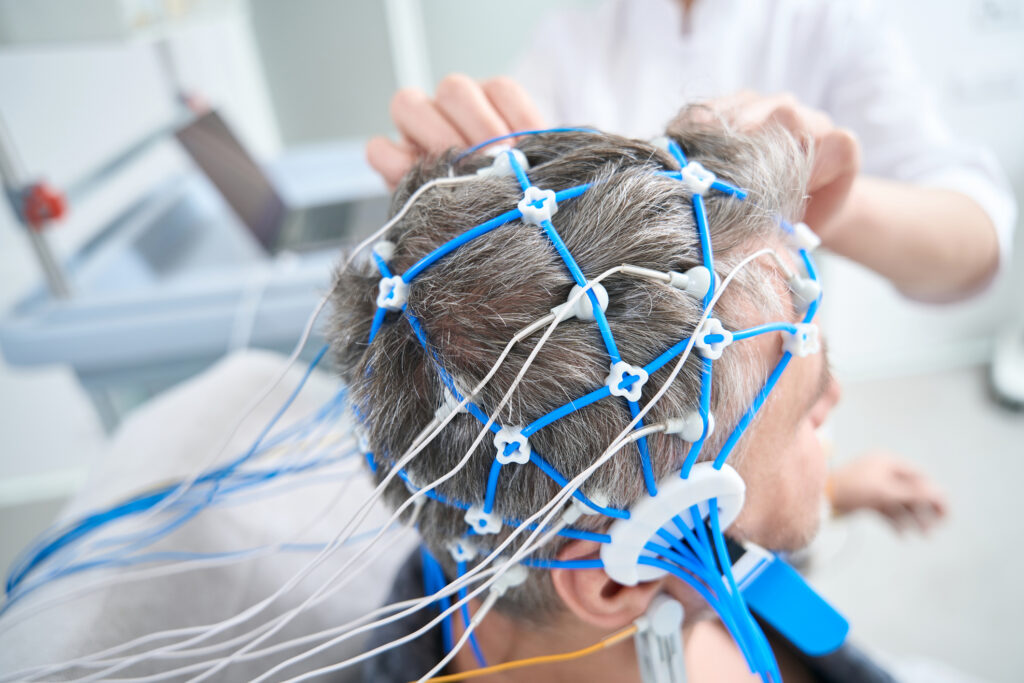
Transcranial magnetic stimulation (TMS) is a non-invasive treatment that uses targeted magnetic pulses to stimulate areas of the brain involved in mood and anxiety regulation. TMS is FDA-approved for depression—including depression with anxious distress—and has shown meaningful benefit for anxiety symptoms, particularly when medication and therapy alone have not been sufficient.
For patients who can’t take SSRIs, who haven’t responded to multiple medications, who want to avoid medication entirely, or who specifically want to avoid benzodiazepines, TMS is an important non-medication option. Sessions are conducted in a comfortable clinical setting, easily accessible from I-4, the Beachline, or Sand Lake Road, typically over 4-6 weeks. The procedure is well-tolerated, requires no sedation or recovery time, and patients can drive themselves home and return to normal activities the same day.
Ketamine IV therapy is a newer, fast-acting option for severe or treatment-resistant anxiety, particularly when significant depression accompanies the anxiety. Unlike traditional antidepressants, which work through serotonin and can take weeks to show effect, ketamine acts on the glutamate system and can produce noticeable symptom relief within hours or days.
Ketamine therapy is delivered under medical supervision in a series of carefully monitored sessions in our Orlando clinic. We integrate it into a broader treatment plan—typically alongside medication management and, when appropriate, therapy—because the window of reduced symptom intensity that ketamine opens can be a powerful time to make other changes that anxiety has been blocking. Ketamine is not appropriate for everyone, and we’ll have a clear conversation about whether it’s the right fit during your evaluation.
In-person appointments in Orlando provide a valuable opportunity for direct interaction with experienced clinicians. Whether you are coming from Dr. Phillips, Lake Nona, Winter Park, Oviedo, or further out in Seminole or Osceola County, these sessions allow for thorough assessments, real conversations about treatment options, and the kind of steady, present care that virtual visits can’t fully replicate.
For anxiety in particular, being physically present matters. Clinicians can observe the signs of activation—shallow breathing, restlessness, jaw tension—that are easy to miss on video. We also pace sessions so you leave feeling steadier, not more activated.
Our Orlando clinic is led by a board-certified psychiatrist and a psychiatric nurse practitioner, both with training in mood, anxiety, and related disorders:
Dr. Joshua Lotfallah, MD — Board-certified Psychiatrist. View profile.
Modupe “Mo” McIntosh, NP — Psychiatric Nurse Practitioner. View profile.
Our Orlando team takes a patient-first, evidence-based approach: treatment plans built around your specific symptoms, life, and preferences; transparent conversations about what each option can and can’t do; and a steady pace that respects how you’re actually doing. With same-day appointments, extended hours, Florida Blue, Tricare, and Champ VA accepted, we’re committed to delivering specialty anxiety care that fits Central Florida life.
Starting anxiety treatment can feel daunting—especially when reaching out is itself an anxiety-provoking task. Your first visit is designed to be welcoming, thorough, and unhurried. Most first appointments run 60 to 90 minutes—long enough to actually hear your story without rushing through it.
We’ll talk about what’s bringing you in, how symptoms have been affecting your life, your history, and your goals. We’ll discuss treatment options and answer your questions—including the questions you’ve been afraid to ask. You won’t be pushed into anything; we’ll come up with a plan together.
The comprehensive evaluation includes a detailed clinical interview, standardized anxiety assessments, screening for co-occurring conditions (depression, OCD, PTSD, ADHD, substance use, sleep disorders, medical conditions that can cause anxiety symptoms), and—when appropriate and with your permission—input from family members or other healthcare providers. This process helps identify the full picture of what’s going on, which is the only way to build a treatment plan that actually addresses it.
We also explore your history with anxiety, any previous treatments, and the strategies you’ve already been using to cope. That history matters; it tells us what’s been tried, what’s helped, and what to do differently this time.
Following the evaluation, we collaborate with you to create a personalized treatment plan that fits your needs and preferences. The plan outlines recommended treatments, expected timeline, and how we’ll measure progress. Goals in anxiety treatment often start practical—better sleep, less reactivity, being able to do specific things that anxiety has been blocking—and expand from there into the broader work of reclaiming the life you want.
We encourage open communication and ongoing feedback so that treatment stays responsive to your evolving needs. Recovery from anxiety isn’t always linear; we expect that and adjust the plan accordingly.
Our clinic is located at 9400 Southpark Center Loop, Suite 450 in Orlando, FL 32819, in the Southpark Center area off Sand Lake Road near Dr. Phillips. We serve patients from across Central Florida, including Dr. Phillips, Lake Nona, Winter Garden, Winter Park, Oviedo, Kissimmee, Altamonte Springs, and the broader Orange, Seminole, and Osceola County areas.
We treat the full range of anxiety disorders, including generalized anxiety disorder (GAD), social anxiety disorder, panic disorder with or without agoraphobia, specific phobias, illness anxiety (health anxiety), and anxiety related to medical conditions or life transitions. We also frequently treat anxiety that co-occurs with depression, OCD, PTSD, ADHD, or substance use.
You’re not overreacting. Hurricane-season anxiety is a well-recognized clinical pattern in coastal communities, especially in Central Florida where we sit in the cone for many storms each season. Sleep disruption during named-storm weeks, compulsive cone-checking, anticipatory dread around evacuation decisions, supply-stockpiling stress, and physical symptoms during heavy rain are all common and treatable. We see this pattern frequently and can build a plan that helps you get through the six-month season with less wear.
This is one of the most common situations we see. Primary care providers often start patients on a first-line SSRI for anxiety, which works well for many people but not for everyone. When it doesn’t work—or only partially works—a psychiatric provider can re-evaluate the diagnosis, consider whether the medication choice, dose, or duration was right, look for co-occurring conditions that might be complicating things, and consider options like TMS or ketamine therapy that primary care typically doesn’t offer. The fact that one medication didn’t work doesn’t mean treatment can’t work.
This is a legitimate concern and we appreciate patients who ask. Benzodiazepines like alprazolam, lorazepam, and clonazepam can be helpful in specific short-term situations, but they carry real risks of tolerance, dependence, and rebound anxiety when used long-term for ongoing anxiety. Our approach favors first-line treatments with stronger long-term track records—SSRIs, SNRIs, buspirone, CBT, and increasingly TMS for patients seeking non-medication options. For patients already on benzodiazepines who want to taper, we develop slow, careful plans rather than abrupt stops.
Yes. A meaningful share of our patients work at Disney, Universal, SeaWorld, the major hotels, and across the broader Central Florida hospitality industry. We understand the specific anxiety patterns that come with shift work, the pressure of being “on stage” for guests, performative emotional labor, social anxiety in front-of-house roles, and the chronic stress of a workforce that doesn’t really have an off-season. Same-day and same-week appointments and extended hours work around shifts.
We are in-network with most major insurance plans, including Florida Blue / Blue Cross Blue Shield, Aetna, Cigna, Humana, Humana Military (Tricare East), Tricare, Champ VA, Medicare, Optum, United Healthcare, and many others. Please contact our Orlando office at 407-495-1733 to verify your specific coverage before your first appointment.
Related Videos
Related Posts

When anxiety becomes a daily shadow instead of an occasional
Post-traumatic stress disorder (PTSD) can make daily life feel like

If you’re living with ongoing depression, you’ve likely explored many